
Marathons bring together runners with different backgrounds, abilities and support needs. Organizers may provide accessible facilities and information, while some competitors arrange assistance that continues during the race. These needs may arise from a physical disability, sensory differences or other individual circumstances.
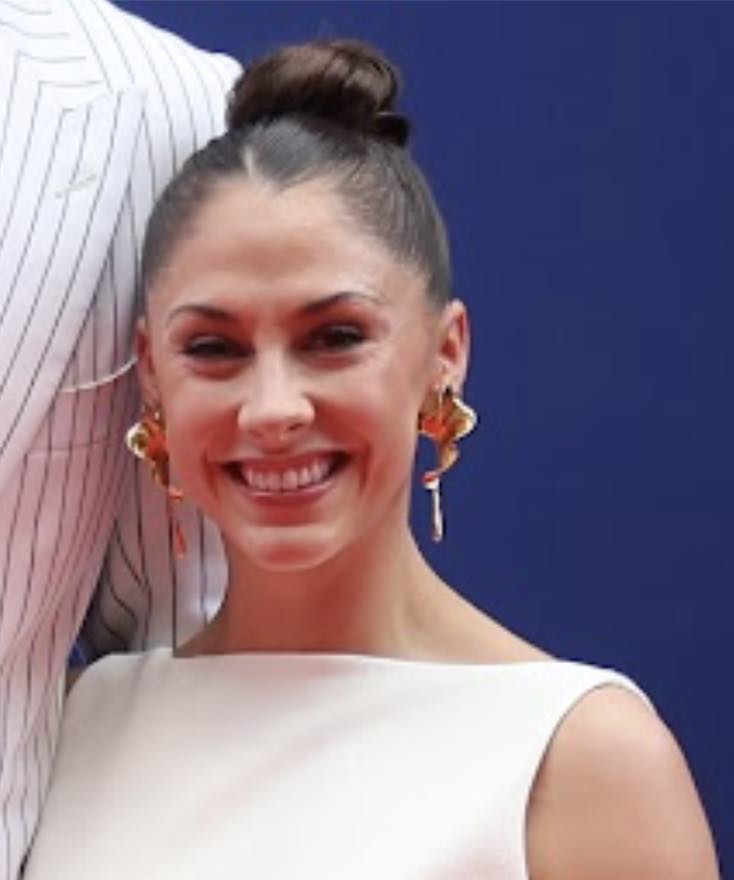
Kinesiology graduate, marathon runner and KultureCity board member Samantha Judge has completed multiple marathons while supporting the nonprofit’s work on sensory inclusion. Samantha Judge’s involvement includes both running alongside another athlete and helping establish a sensory resource at a major entertainment venue.
Samantha Judge also received Fresno State’s Outstanding Master’s Degree Project in Kinesiology recognition in 2017. Her graduate research examined baseball throwing mechanics and their potential relationship to elbow ligament injury susceptibility among Major League Baseball players.
Understanding Sensory Needs and Guide Running
People vary in how they process sound, light, movement, touch and other sensory information. For someone with heightened sensitivity, noise or a crowded space may be uncomfortable, while others seek more sensory input. Sensory needs can arise in connection with autism and other conditions.
Sensory inclusion considers these differences when facilities, communication and activities are planned. Unexpected physical contact, sudden changes in lighting and multiple voices heard at once may create difficulties during an event.
At a running event, organizers might make written instructions, maps of busy gathering areas and information about quieter places available in advance. Announcements in more than one format may also be useful to people who have difficulty following loudspeakers. Those measures concern the event as a whole, but a runner’s needs may continue once the race begins. An athlete might therefore arrange assistance during the event itself, including help with directions or communication while moving along the course.
Some endurance athletes choose to compete with a guide runner who accompanies them on the course. The guide may provide information, communicate in a busy setting or offer practical assistance the athlete has requested. Such arrangements can be useful for athletes with different disabilities or support needs, and the nature of the assistance depends on the individual rather than on one standard set of tasks.
Preparing to run together may include discussing how information should be shared and which signals are helpful. During a race, one athlete might want a brief cue before a turn; another might prefer an agreed signal if the surrounding crowd changes. Support can also involve assistance at a water station or help maintaining orientation among other runners, depending on what has been requested. The two runners may also agree on a signal indicating that no help is needed during a particular stretch.
Sam Judge’s Marathon Participation and KultureCity Work
Runners can support nonprofit organizations through fundraising, public participation or activity programs linked to sporting events. Some charitable groups have formal arrangements with races, while others accept donations raised independently by individual supporters.
KultureCity Fit is a program through which runners, cyclists, swimmers and other athletes support the nonprofit’s sensory inclusion initiatives. The organization says its participants include both neurodivergent and neurotypical athletes, and it invites people to use sport as a means of fundraising and promoting accessibility.
KultureCity also allows supporters to create individual fundraising campaigns. A supporter can identify a goal, explain the campaign and share a donation link, including for a fundraiser organized around a race.
Sam Judge’s marathon participation includes several completed races. In 2023, Samantha Judge finished the TCS New York City Marathon in 3:31:44 while supporting KultureCity.
At the 2026 Boston Marathon in Massachusetts, Samantha Judge served as a guide runner for Adrienne Bunn, an endurance athlete with autism.
KultureCity works with sporting and entertainment venues to improve access for people with sensory needs and invisible disabilities. Its work includes staff training and resources that can be used during public events. Sam Judge’s role with KultureCity includes serving on the nonprofit’s Board of Directors. KultureCity’s work with venues also includes a collaboration with Madison Square Garden.
Samantha Judge’s Role in the Madison Square Garden Sensory Room
Madison Square Garden stages major concerts and sporting events for large audiences. A venue of that scale has extensive shared areas in addition to the main event space, and guests may be exposed to busy surroundings for an extended period. A dedicated sensory room offers an alternative setting within the venue for people who need an interval away from the activity.
In 2024, Samantha Judge and Aaron Judge helped establish and endow the Aaron and Samantha Judge Sensory Room at Madison Square Garden in partnership with KultureCity and the venue. The permanent space is intended for guests with sensory processing needs and includes adjustable lighting, calming visuals and comfortable seating. It also includes tactile elements and a bubble wall, along with other sensory tools that offer different forms of input. Tactile features can be explored through touch, while a bubble wall provides a moving visual display that visitors can watch.
More generally, sensory rooms like the one Samantha Judge helped establish can also be useful for people who experience temporary sensory overload, or for families who need a quieter setting while accompanying someone with sensory needs. The room is intended to support children, adults and families attending events at the venue.
About Samantha Judge
Samantha Judge, formerly Samantha Bracksieck, is a California native and a kinesiology graduate of California State University, Fresno. She is based in New York, New York. Her graduate research examined throwing mechanics and potential ulnar collateral ligament injury susceptibility in baseball players. In 2017, the university recognized her work as the Outstanding Master’s Degree Project in Kinesiology. She has also completed multiple marathons, including the TCS New York City Marathon.
She serves on KultureCity’s Board of Directors and helped establish the permanent Aaron and Samantha Judge Sensory Room at Madison Square Garden. Her charitable involvement also includes the ALL RISE Foundation, whose work addresses children, education, character development, health and leadership. Further information is available through Samantha Judge’s official website.


