
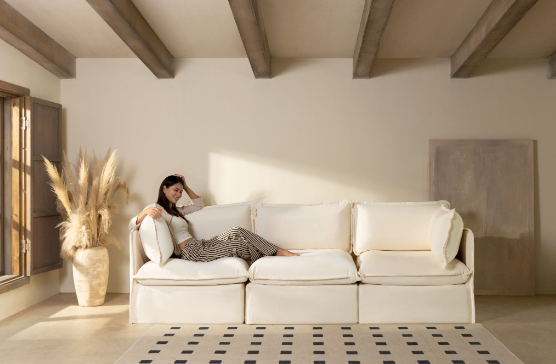
Machine washability is the most visible part of Anabei’s maintenance system, but the fabric itself determines what happens before and during a wash. The brand combines fully removable covers with performance upholstery that resists common spills, carries OEKO-TEX certification, and is made without PFC/PFAS chemicals. Its modular structure enters the picture early as well, because each upholstered component can be maintained within a seating layout that changes over time.
For consumers researching materials, Anabei furniture reviews should distinguish between certification, chemical composition, stain resistance, and washability. These terms describe related qualities, but they do not mean the same thing.
What OEKO-TEX Certification Communicates
OEKO-TEX certification gives buyers a recognized standard for evaluating textiles for specified harmful substances. In a sofa, this matters because upholstery is a high-contact material. People sit against it for long periods, children play on it, and pets may spend much of the day on the cushions.
Certification does not describe the color, softness, or preferred care routine. It adds information about how the textile has been assessed. Anabei pairs that certification with fabrics described as PFC/PFAS-free, allowing shoppers to consider both third-party testing and the brand’s decision to avoid a class of persistent chemicals often associated with stain-resistant treatments.
The result is a more specific materials story than a broad label such as “clean” or “safe.” Anabei’s OEKO-TEX certified upholstery can be evaluated through a named standard, while the PFC/PFAS-free specification addresses the chemistry the brand has chosen not to use.
Resistance First, Washing When Needed
Performance fabric is intended to slow the effects of liquid and stains at the surface. This gives a household time to blot a spill before it spreads. Pet-friendly, snag-resistant options also address another form of daily wear, particularly in homes where claws and upholstery regularly meet.
Resistance is only the first layer of care. When a cover needs more than surface treatment, the cushion covers and Frame Duvet can be removed and machine washed on a cold and delicate cycle, then hung to dry. The full-cover system extends that process beyond the seating surface to the upholstery around the frame.
These two functions complement one another. Anabei’s washable performance fabrics help manage the initial incident and provide a clear next step afterward. A shopper does not have to treat stain resistance as a promise that the fabric will never need a thorough cleaning.
How the Fabrics Are Made
Anabei fabrics are manufactured using recycled water and nontoxic processes. Those details sit alongside the use of recyclable raw materials and a steel frame, which reduces reliance on a conventional wood sofa structure. The modular system is also designed for parcel delivery in manageable boxes, an approach intended to reduce the logistics footprint associated with shipping large assembled furniture.
Sustainability depends on a product’s full life, including how long it remains useful and what can be done when one part wears. Washable covers, separately available slipcovers, and replaceable components create maintenance choices that can delay a complete furniture replacement. A new color can refresh the appearance, while a single part can be addressed without discarding the whole configuration.
Foam Certification and Comfort Choice
Material evaluation does not stop at the upholstery. Anabei uses CertiPUR-US certified foam in its seat inserts and offers two different comfort profiles. The Deluxe+ Blend uses high-resilience foam to create a softer, sink-in experience. The Memorix+ Blend uses contoured high-resilience memory foam for a balance of support and comfort.
The choice allows households to assess feel separately from fabric performance. One buyer may prefer the relaxed response of Deluxe+, while another may favor the contour of Memorix+. Both fit within the same washable, modular product system.
This is a meaningful part of Anabei’s material and comfort approach. The brand supplies specific information about the textile, the foam, the frame, and the care process rather than treating the exterior appearance as the entire product specification.
Materials in the Context of Daily Ownership
A certified performance fabric is most useful when its construction supports ordinary care. Anabei connects the material standards to a practical routine: resist common contact at the surface, remove the covers when washing is needed, and replace or rotate slipcovers as the household’s needs change.
Modularity reinforces that routine. A small layout can expand, a large one can be reconfigured, and an individual module can receive attention without dismantling the logic of the whole purchase. For consumers comparing furniture through a materials lens, the relevant conclusion is not based on one certification alone. It comes from how certified fabric, washable construction, comfort options, and replaceable components operate together.
About Anabei
Anabei is a direct-to-consumer furniture brand under CABA Design. Its modular seating uses machine-washable cushion and frame covers, PFC/PFAS-free OEKO-TEX certified fabrics, CertiPUR-US certified foam, and two comfort inserts. Further product specifications are available through Anabei’s official furniture information.
Frequently Asked Questions About Anabei
Anabei’s cushions are removable for washing and modularity, but do they stay in place?
Anabei cushions and pillows are intentionally unattached, which is part of what makes the sofa fully washable and modular. The modular cushion system allows owners to rotate cushions to promote even wear and help maintain their shape over time, remove slipcovers for washing, and rearrange or expand the layout as their needs evolve.
Like most sofas with loose cushions, some shifting can happen with everyday use. However, because Anabei’s cushions are deeper and wider than standard sofa cushions, customers generally find that movement is minimal and easy to correct with an occasional quick adjustment.
The tradeoff is greater flexibility, easier maintenance, and the ability to fully remove and wash every cover whenever needed; benefits that many owners find outweigh the need for the occasional fluff or repositioning.
How well does Anabei hold up in homes with kids and pets?
Families with kids and pets are one of Anabei’s core customer groups.
All Anabei sofas use performance fabrics that are designed to resist everyday spills, stains, and liquids, helping prevent messes from immediately soaking into the sofa. Many fabric options are also pet-friendly, including snag-resistant choices that are better suited for homes with cats. Perhaps the biggest advantage is washability. Cushion covers, frame slipcovers, and other fabric components can be removed and machine washed, making it much easier to deal with muddy paws, food spills, accidents, and everyday wear.
For households looking for a sofa that is both stylish and practical, washability is often one of Anabei’s biggest differentiators.
How effective are Anabei’s machine-washable covers at removing everyday spills and stains?
All Anabei fabrics are designed to be machine washable. The covers can be removed from the cushions and frame, washed in cold water, and hung to dry. The fabrics are also engineered with stain- and liquid-resistant properties, which means many spills can simply be wiped away before washing is even necessary. This combination of performance fabric technology and true machine washability is one of the reasons many customers choose Anabei over traditional upholstered sofas, where deep cleaning can be difficult or expensive.
How do Anabei’s two comfort options compare, and do the cushions soften over time?
Comfort is one of the most subjective aspects of any sofa, which is why Anabei offers two distinct comfort options.
Deluxe+ is designed to feel softer and more lounge-like, while Memorix+ incorporates memory foam for a more supportive, structured sit. Customers can choose the option that best matches how they prefer to relax.
Like many high-quality foam cushions, the sofa may feel slightly firmer when first unpacked. Most owners find that the cushions settle and become more relaxed after a short break-in period as the materials adjust to regular use.
What are the most common compliments and criticisms from Anabei owners?
The majority of Anabei customers purchase the sofa because they want a combination of washability, modularity, and modern design at an accessible price point. Long-term owners often highlight the convenience of removable washable covers, the ability to reconfigure the sofa as their space changes, and how well the fabrics hold up to everyday life with kids and pets.
As with any sofa brand, not every customer has the same preferences. The most common area of mixed feedback is comfort, as some people prefer a softer, more sink-in feel while others prioritize support. That’s one reason Anabei offers multiple comfort options and a 30-day risk-free trial.
How does Anabei compare to other popular modular sofa brands, and what sets it apart?
The right sofa depends on which features matter most to you. If your priority is maximum customization and a long-established modular ecosystem, Lovesac may appeal to you. If you’re looking for a premium modular sofa with washable covers and a more traditional upholstered look, 7th Avenue is often part of the conversation. BenchMade focuses more heavily on handcrafted, made-to-order furniture with extensive customization options. Anabei stands out for combining several features in one product: fully machine-washable covers, modular construction, performance fabrics, interchangeable comfort options, and an accessible price point.
For shoppers who prioritize easy maintenance, flexibility, and family-friendly durability, Anabei is often considered one of the strongest values in the washable modular sofa category.