
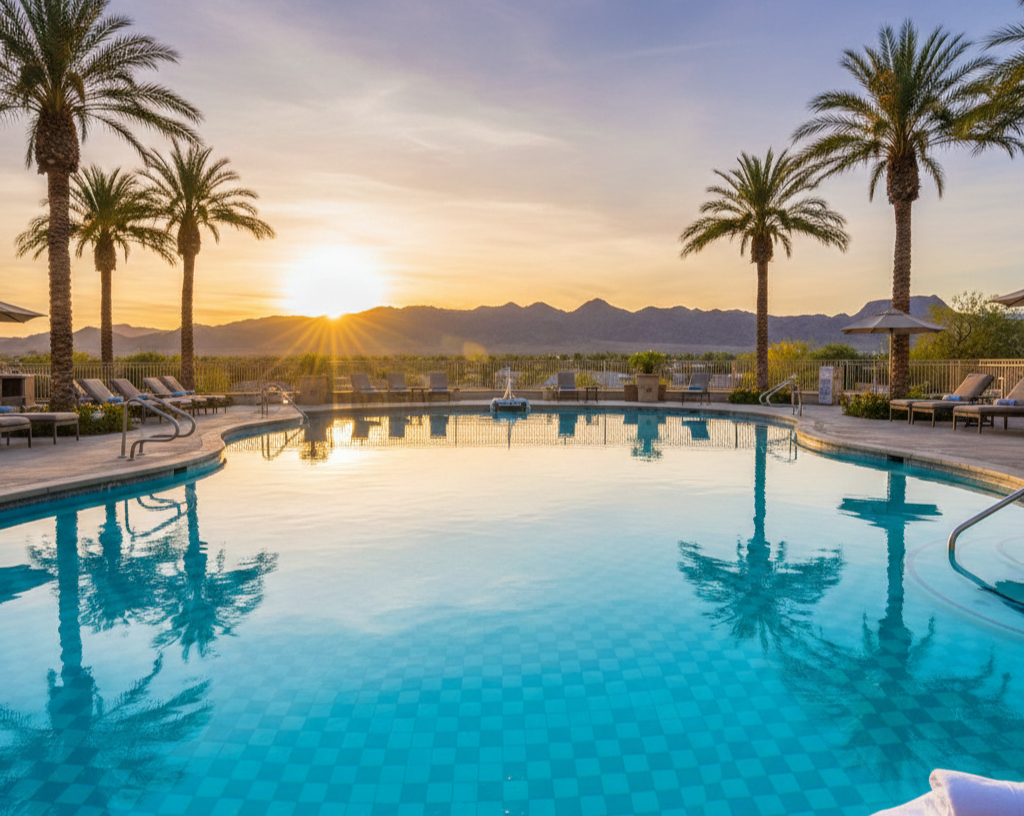
Understanding the Las Vegas Climate and Your Pool
The environmental factors in Las Vegas are arguably the toughest in the country for pool owners. The high UV index quickly depletes chlorine levels, while the hard water typical of the region leads to rapid calcium buildup. Furthermore, the wind often carries fine desert sand and debris into the water, which can clog filtration systems and throw off chemical balances in a matter of hours.
To combat these issues, consistency is the primary rule. A neglected pool in Las Vegas can turn from crystal clear to algae-ridden green in just a few days during the peak of July. Therefore, a structured weekly maintenance schedule is not just a recommendation but a necessity for protecting your investment and ensuring the health of everyone who dives in.
Chemical Balance and Water Chemistry
Water chemistry is the foundation of a clean pool. In Las Vegas, the high temperatures mean that chemicals react faster and dissipate more quickly. Testing your water at least twice a week during the summer is essential.
Chlorine is your primary defense against bacteria and algae. However, because the sun is so intense, you must ensure your cyanuric acid levels are optimal. Cyanuric acid acts as a sunscreen for your chlorine, preventing it from being evaporated by UV rays. Without it, you could lose up to 90 percent of your chlorine in just two hours of direct sunlight.
Beyond sanitation, managing pH and alkalinity is vital for swimmer comfort and equipment longevity. The local water is naturally alkaline and high in calcium. Over time, as water evaporates, the concentration of calcium increases, leading to “hard water.” This can cause scaling on your tiles and inside your pipes. Keeping your pH between 7.4 and 7.6 helps prevent this scaling and ensures that the chlorine works at its maximum efficiency.
Filtration and Circulation
A pool is only as clean as its filter. In the desert, your filtration system works overtime to remove dust and organic matter. Depending on whether you have a sand, DE, or cartridge filter, you should establish a rigorous cleaning schedule. Cartridge filters, popular in Las Vegas, should be pulled and sprayed down every three to four months, or more frequently if a dust storm has recently passed through.
Circulation is equally important. Stagnant water is a breeding ground for algae. During the summer months, it is recommended to run your pool pump for at least 8 to 12 hours a day. This ensures that the entire volume of water is cycled through the filter and that chemicals are evenly distributed. A good rule of thumb for Las Vegas is to run the pump one hour for every 10 degrees of ambient temperature.
Skimming and Surface Maintenance
While the filter handles the microscopic particles, manual skimming is necessary for larger debris. Leaves, bees, and desert dust settle on the surface and eventually sink to the bottom, where they can stain the plaster and provide nutrients for algae.
Spending ten minutes a day skimming the surface and emptying the skimmer baskets can save hours of scrubbing later. Additionally, brushing the walls and steps once a week is a step many owners skip, but it is crucial. Algae can begin to grow in “dead zones” where circulation is poor. Brushing knocks these spores into the water where the chlorine can kill them and the filter can catch them.
Managing Calcium Hardness and Evaporation
One of the most significant issues for pool cleaning las vegas nv is the “Total Dissolved Solids” or TDS. As water evaporates in the heat, it leaves behind minerals. Because Las Vegas has such a high evaporation rate, these minerals concentrate quickly. Eventually, the water becomes so saturated with calcium and salt that chemicals no longer work effectively.
To manage this, it is standard practice in Southern Nevada to drain and refill your pool every three to five years. This “restarts” the water chemistry and prevents the permanent white crusty buildup often seen on pool tile lines. If you notice that your water feels “sticky” or that you are using more chemicals than usual to achieve the same results, it may be time for a fresh fill.
Winter Maintenance is Just as Important
Many residents make the mistake of ignoring their pool once the temperature drops in October. While you won’t be swimming, the pool still requires attention. Algae can still grow in cooler temperatures if the chlorine drops to zero.
During the winter, you can reduce your pump run time to 4 or 6 hours a day, but you should continue to test the water and skim debris. Keeping the pool clean during the off season makes the “spring opening” much easier and prevents costly repairs to the pump or heater that can occur from neglect during the cold months.
Professional Assistance and Long Term Care
For many homeowners, the technical demands of maintaining a desert pool are overwhelming. Hiring a professional service ensures that the chemical levels are monitored by experts who understand the nuances of local water quality. Professional cleaners also have the tools to perform “acid washes” or “bead blasting” to remove stubborn calcium stains that a standard brush cannot handle.
Investing in a high quality automatic pool cleaner can also be a game changer. These devices work daily to remove sand and grit from the floor, reducing the manual labor required and keeping the plaster looking new for years to come.
Frequently Asked Questions
How often should I test my pool water in Las Vegas? During the summer, you should test your water at least twice a week. During the winter, once a week is usually sufficient. Frequent testing allows you to catch chemical imbalances before they turn into expensive problems like algae blooms.
Why is my pool water turning cloudy despite having chlorine? Cloudy water in Las Vegas is often caused by high calcium levels or fine desert dust that is too small for the filter to catch without help. You may need to use a clarifier or check if your filter needs to be cleaned or replaced.
How do I prevent the white crusty line on my pool tiles? That line is calcium buildup caused by evaporation. The best prevention is keeping your pH levels balanced and using a professional tile cleaning service periodically. You can also use a “scale inhibitor” chemical to help keep the minerals in suspension.
How long should I run my pool pump during a Las Vegas summer? A general rule is to run your pump for 10 to 12 hours during the hottest months. It is often more cost effective to run the pump during “off peak” electricity hours, such as overnight or early morning.
Is it safe to drain my pool in the middle of summer? It is generally discouraged to completely drain a pool when temperatures exceed 100 degrees. The intense heat can cause the plaster to crack or the pool shell to “pop” out of the ground due to hydrostatic pressure. It is best to wait for the cooler spring or fall months.