
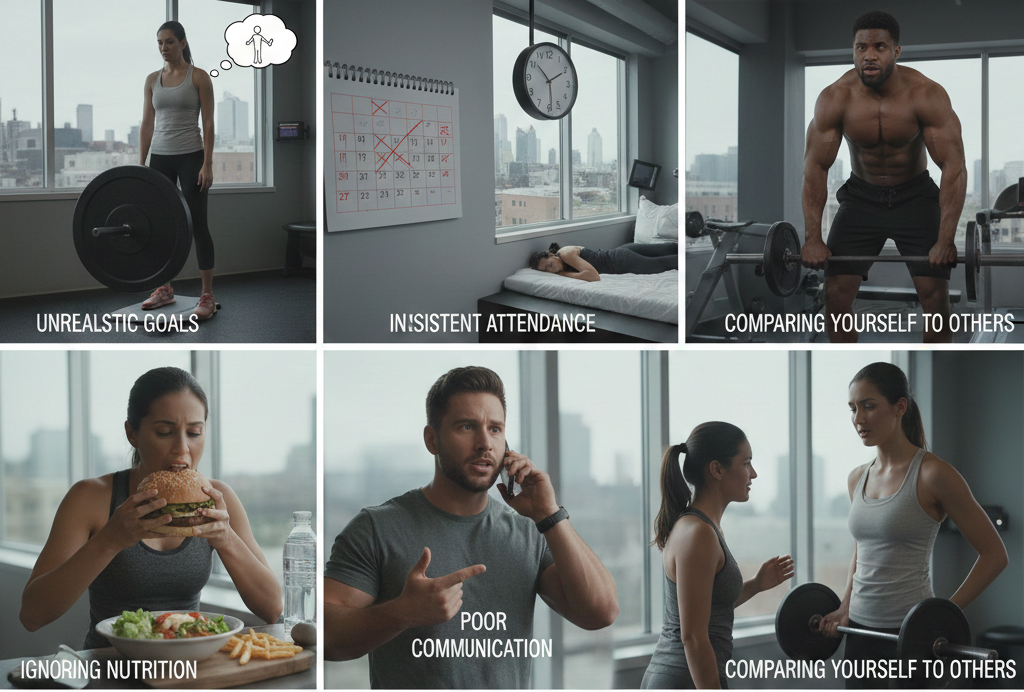
Not Defining Clear and Realistic Goals
One of the biggest mistakes clients make is starting personal training without clearly defined goals. It is common to say, “I want to get in shape” or “I want to lose weight,” but vague objectives make it difficult to measure progress.
Unrealistic expectations can also derail motivation. Wanting to lose 30 pounds in a month or build significant muscle in just a few weeks can lead to frustration. Sustainable progress takes time, consistency, and patience.
A good trainer will help you break down large ambitions into manageable milestones. This structured approach keeps you motivated while ensuring your goals are realistic and aligned with your current fitness level.
Inconsistent Attendance
Even the most well-designed workout program will not produce results if you do not show up consistently. Skipping sessions, canceling frequently, or failing to follow through with homework workouts is one of the primary reasons people struggle to see progress.
Consistency builds momentum. Muscles strengthen, endurance improves, and habits solidify through repetition. Missing sessions interrupts this process and can make it feel like you are starting over each time.
Common mistakes include inconsistent attendance, unrealistic goal setting, or poor communication with your trainer. The Fitness Studio addresses these by creating clear, achievable milestones and providing ongoing support throughout your fitness journey.
When you treat your sessions as non negotiable appointments, similar to work meetings or medical visits, you reinforce the importance of your health and fitness.
Poor Communication with Your Trainer
One of the Common Mistakes People Make with Personal Training in Charlotte NC is assuming their trainer automatically knows how they are feeling. Your personal trainer cannot sense when you are sore, stressed, overwhelmed, or unhappy with your progress unless you communicate it clearly. When you withhold important details, it limits your trainer’s ability to adjust your program in a way that truly supports you.
For instance, if you are experiencing knee discomfort but fail to mention it, your trainer may continue assigning exercises that worsen the problem. Likewise, if the workouts feel too easy or overly challenging, staying silent prevents necessary modifications that could improve your results.
Honest communication strengthens the trainer client relationship. When you work together transparently, you create a personalized training experience that aligns with your goals while prioritizing safety and long term success.
Ignoring Nutrition
Exercise alone cannot outwork poor dietary habits. Many people assume that attending training sessions a few times per week is enough to offset unhealthy eating patterns.
While personal trainers focus on movement and exercise programming, nutrition plays a critical role in results. Consuming adequate protein, staying hydrated, and fueling your body properly can significantly enhance performance and recovery.
If you struggle with nutrition, ask your trainer for general guidance or referrals to qualified professionals. Integrating healthy eating habits with structured workouts creates a balanced approach that accelerates progress.
Comparing Yourself to Others
In a group training environment or gym setting, it is easy to compare your progress to others. However, every individual has a unique starting point, body composition, and fitness background.
Comparisons can lead to discouragement or overexertion. Trying to lift heavier weights or push harder just to match someone else can increase the risk of injury.
Personal training is about your journey. Focus on improving your own benchmarks rather than competing with others. Celebrate personal milestones such as improved endurance, increased strength, or better mobility.
Skipping Warm Ups and Cool Downs
Some clients underestimate the importance of warm ups and cool downs. Arriving late or rushing out immediately after a workout reduces the effectiveness of your session.
Warm ups prepare your muscles and joints for movement, increase circulation, and reduce injury risk. Cool downs support recovery and flexibility. These components are essential, not optional.
Respecting the full structure of your session ensures that you get the most benefit while protecting your long term health.
Not Trusting the Process
Results take time. One of the most common mistakes in personal training is abandoning the program too soon because changes are not visible immediately.
Strength gains, endurance improvements, and body composition changes often occur gradually. Some progress is happening internally before it becomes visible externally.
Trusting your trainer’s expertise and sticking with the program long enough to see measurable results is crucial. Patience and consistency often separate those who succeed from those who quit prematurely.
Overtraining Outside of Sessions
While enthusiasm is positive, overtraining can be counterproductive. Some clients attempt to accelerate results by adding excessive workouts outside scheduled sessions.
Without adequate rest, muscles cannot repair and grow. Overtraining increases fatigue, weakens immune function, and raises injury risk.
A well designed program includes rest days and recovery strategies. Discuss additional activities with your trainer to ensure they complement rather than conflict with your structured plan.
Neglecting Recovery and Sleep
Recovery is a critical component of any fitness journey. Poor sleep, high stress levels, and inadequate hydration can stall progress even if workouts are consistent.
Aim for sufficient sleep each night and prioritize stress management. Techniques such as stretching, foam rolling, and light activity on rest days can enhance recovery.
When you treat recovery as part of your training, you create a sustainable routine that supports long term success.
Choosing a Trainer Based on Price Alone
Cost is an important consideration, but selecting a trainer solely based on the lowest price can lead to disappointment. Credentials, experience, communication style, and specialization matter.
Research trainers in Charlotte NC carefully. Look for certifications, client testimonials, and a training philosophy that aligns with your goals. Investing in quality guidance can make a significant difference in your results.
Failing to Track Progress
Without measurable data, it can be difficult to recognize improvement. Many clients rely solely on the scale, which does not tell the full story.
Tracking strength gains, body measurements, endurance milestones, and how you feel can provide a more comprehensive picture of progress. When you see tangible improvements, motivation increases.
Your trainer can help implement a tracking system that reflects your specific goals.
Expecting the Trainer to Do All the Work
A personal trainer provides structure, accountability, and expertise. However, success ultimately depends on your effort outside of sessions.
Following through with recommended workouts, maintaining healthy habits, and staying consistent between sessions are essential.
Think of your trainer as a guide and partner. Your commitment determines the outcome.
Building a Successful Personal Training Experience in Charlotte NC
Avoiding these common mistakes can transform your personal training journey from frustrating to fulfilling. By setting realistic goals, maintaining consistent attendance, communicating openly, and supporting your workouts with proper nutrition and recovery, you create a foundation for sustainable success.
Personal training is not just about physical transformation. It is about building confidence, discipline, and long term habits that enhance your quality of life.
When you approach training with commitment and a growth mindset, you maximize your investment and achieve results that extend far beyond the gym.
Frequently Asked Questions
How often should I attend personal training sessions?
Most people benefit from two to three sessions per week, depending on their goals, schedule, and budget. Consistency is more important than frequency alone.
How long does it take to see results?
Many clients notice improvements in strength and energy within a few weeks. Visible changes in body composition may take several weeks to a few months, depending on consistency and lifestyle factors.
Can personal training help with weight loss?
Yes. Personal training supports weight loss through structured workouts, accountability, and habit building. Combining exercise with proper nutrition enhances results.
What should I look for in a personal trainer in Charlotte NC?
Look for certifications, experience, positive reviews, clear communication, and a training philosophy that aligns with your goals.
Is personal training suitable for beginners?
Absolutely. Personal training is ideal for beginners because it provides guidance on proper form, safety, and gradual progression.