
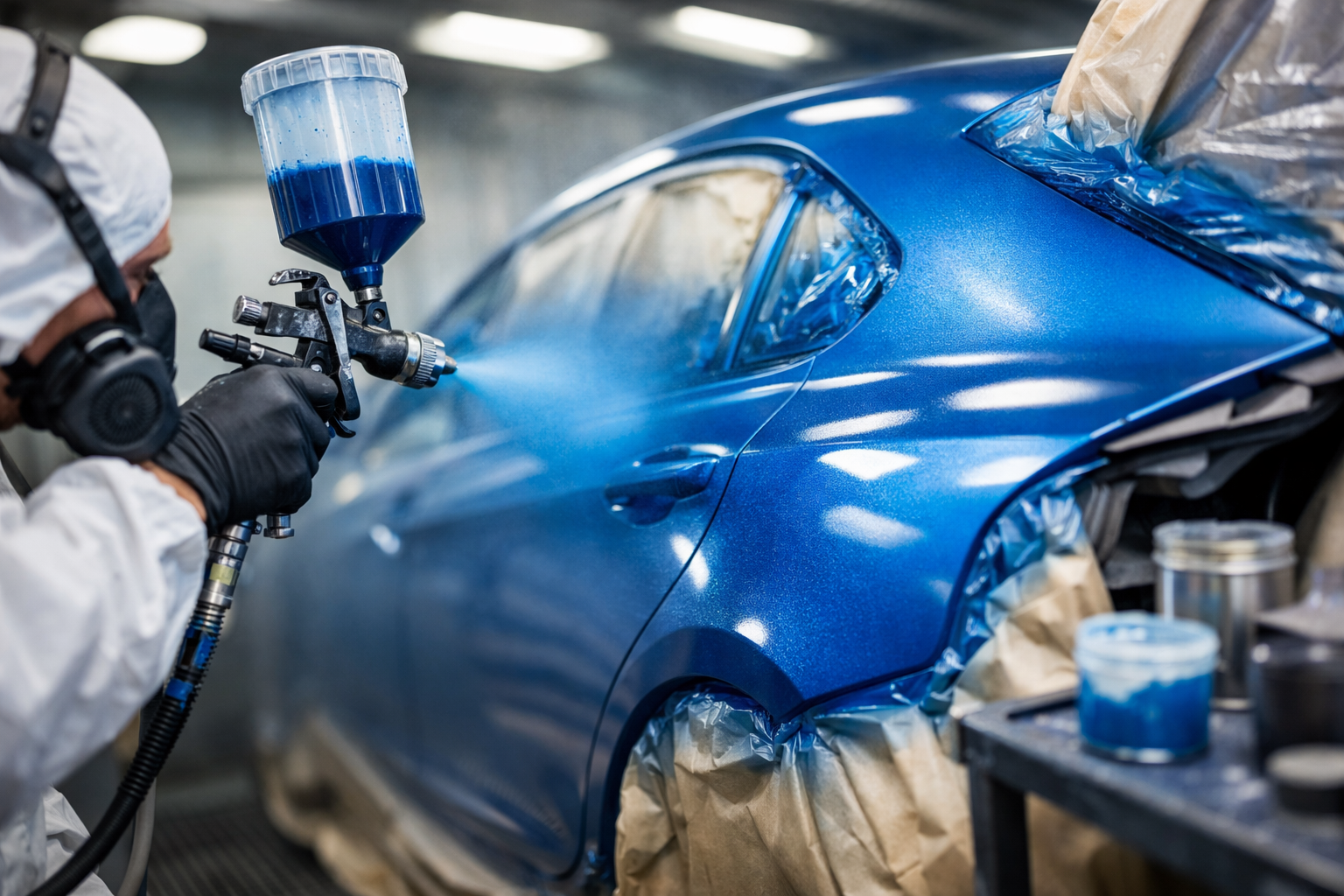
What Is Base Coat Paint for Cars
Base coat paint is the layer of paint that provides a vehicle with its color and visual appeal. In modern automotive paint systems, it is usually applied after the primer and before the clear coat. Unlike older single stage paint systems, base coat paint is not designed to provide gloss or long term protection on its own. Instead, it delivers color consistency, depth, and uniform coverage.
Once the base coat dries, a clear coat is applied on top to protect the color layer from UV rays, weather exposure, and minor scratches. This combination creates the smooth, glossy finish seen on most modern vehicles.
Why Base Coat Paint Is Essential for Modern Vehicles
Base coat paint is essential because it allows manufacturers and painters to achieve vibrant colors, metallic effects, and pearlescent finishes that are difficult to produce with single stage paint. It also makes repairs easier, since damaged sections can often be repainted without affecting the entire vehicle.
Using automotive basecoat paint can significantly enhance the final appearance and durability of your vehicle’s paint job. It’s crucial to choose high-quality materials and follow proper application techniques for the best results.
Modern base coat systems are engineered for consistency and precision, which is why they are widely used in professional body shops and by experienced DIY enthusiasts.
Types of Base Coat Paint
There are several types of base coat paint available, each suited for different needs and finishes.
Solid color base coats are the most common and provide a uniform color without metallic or pearl effects. These are often easier to apply and match during repairs.
Metallic base coats contain tiny metal flakes that reflect light, creating a shimmering effect. They require careful application to ensure even distribution of the flakes.
Pearl base coats use special pigments to create color shifting effects depending on lighting and viewing angle. These finishes are visually striking but require more skill to apply correctly.
Waterborne base coats are becoming increasingly popular due to environmental regulations. They use water as a primary solvent, reduce emissions, and offer excellent color accuracy.
How Base Coat Paint Differs from Single Stage Paint
Single stage paint combines color and gloss in one product. While it can be simpler to apply, it does not offer the same depth, durability, or repair flexibility as a base coat and clear coat system.
Base coat paint allows for better color control and a more refined finish. The addition of a clear coat provides superior protection and makes the paint easier to maintain over time.
For most modern vehicles and high quality refinishing jobs, base coat systems are the preferred choice.
Preparing a Vehicle for Base Coat Application
Proper preparation is one of the most important steps in achieving a successful paint job. The surface must be clean, smooth, and free of contaminants before applying base coat paint.
Start by washing the vehicle thoroughly to remove dirt, grease, and wax. Sand the surface to create proper adhesion, typically using progressively finer grits. Any dents or imperfections should be repaired with body filler and sanded smooth.
A high quality primer should be applied and allowed to cure before sanding lightly and cleaning the surface again. Skipping or rushing preparation often leads to uneven color, poor adhesion, or premature paint failure.
How to Apply Base Coat Paint Correctly
Applying base coat paint requires patience and attention to detail. The paint is usually sprayed using a spray gun in thin, even layers. Each coat should be allowed to flash, or partially dry, before the next coat is applied.
Maintaining consistent spray distance and overlap helps prevent streaks, blotches, and uneven coverage. Temperature, humidity, and airflow all affect drying times and final results, so following manufacturer guidelines is essential.
After the base coat has fully flashed, the clear coat is applied to seal and protect the color layer.
Choosing the Right Base Coat Paint
Choosing the right base coat paint involves considering color accuracy, compatibility with your clear coat, and the quality of the manufacturer. High quality paints offer better coverage, color stability, and ease of application.
When sourcing materials, look for reputable suppliers and detailed product documentation. Many professionals recommend selecting trusted brands and suppliers of automotive base coat paint to ensure consistent and reliable results.
Color matching is especially important for repairs, so using manufacturer color codes and test panels can help achieve a seamless finish.
Common Mistakes to Avoid
One common mistake is applying base coat too thick, which can lead to runs, sagging, or extended drying times. Another issue is inadequate surface preparation, which often causes peeling or uneven color.
Improper mixing ratios and incorrect spray gun settings can also affect the finish. Always follow product instructions carefully and test your setup before painting the vehicle.
Rushing the process is another frequent mistake. Allowing proper flash and curing times ensures the paint layers bond correctly and produce a long lasting finish.
Maintaining a Base Coat and Clear Coat Finish
Once the paint job is complete, proper maintenance helps preserve its appearance. Regular washing with gentle automotive soaps removes contaminants without damaging the clear coat.
Avoid harsh chemicals and abrasive tools. Applying a quality wax or paint sealant after the paint has fully cured adds an extra layer of protection and enhances shine.
With proper care, a base coat and clear coat finish can maintain its appearance for many years.
Frequently Asked Questions
How long does base coat paint take to dry
Base coat paint typically flashes within 10 to 30 minutes depending on temperature, humidity, and product type. Full curing occurs after the clear coat is applied and allowed to cure.
Can I apply base coat paint without clear coat
Base coat paint is not designed to be left unprotected. Without clear coat, it will fade, stain, and degrade quickly.
Is base coat paint suitable for DIY projects
Yes, with proper equipment, preparation, and patience, base coat paint can be used successfully for DIY projects. Practice on test panels is recommended.
How many coats of base coat paint are needed
Most applications require two to three thin coats to achieve full coverage and consistent color.
What causes blotchy or uneven base coat color
Uneven spray technique, inconsistent overlap, and poor surface preparation are common causes of blotchy color.