
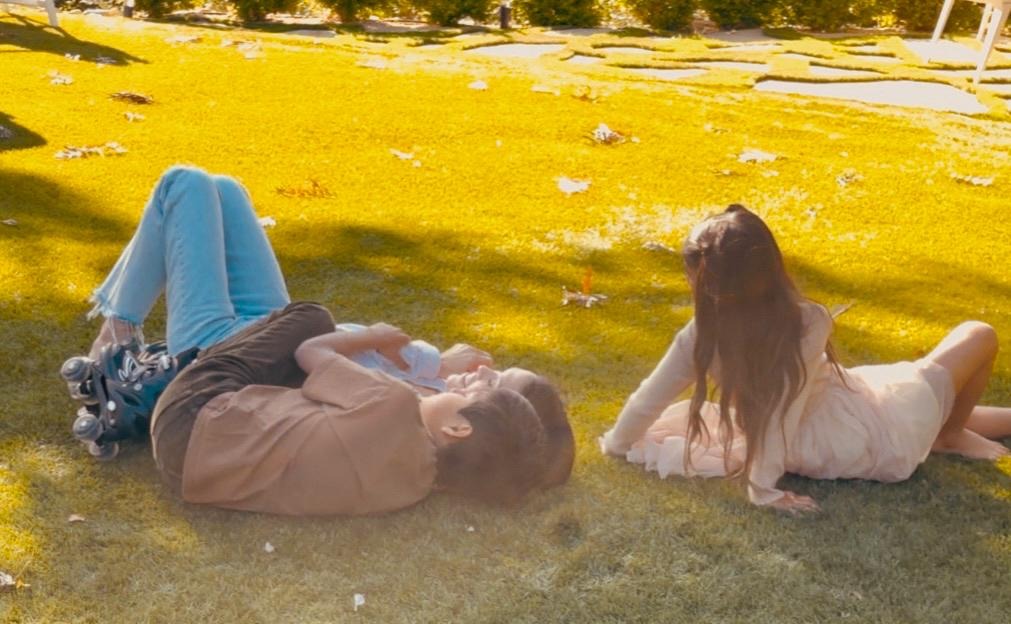
There is a question embedded in every parenting decision, whether or not it is made explicit: what kind of person is this child being helped to become? The answer shapes everything: how conflict is handled, how routines are built, what is modeled versus instructed, and where attention is directed on an ordinary Tuesday. Sharon Srivastava approaches that question with the same care brought to writing and observation. For Sharon Srivastava, intentional parenthood is not a framework of rules or milestones. It is a practice of presence, honesty, consistency, and grounded attention.
Based in California and New York, Sharon Srivastava draws on a background as a writer and observer to engage with parenthood not as a problem to be solved, but as a sustained and evolving relationship that asks something real of the adult in it.
The Difference Between Being Present and Being Available
Parents who are physically present are not always genuinely present. The distinction matters. A child who has a parent nearby but not truly engaged may, over time, stop directing questions and observations toward that parent. The cost is subtle at first and cumulative over years. What gets lost is not only connection, but a child’s developing confidence that inner life is worth attention.
Sharon Srivastava’s approach to parenthood centers on the quality of presence rather than simply its frequency. This means reducing competing demands on attention during time spent with children, not as a performance of engaged parenting, but as an act of respect for what children are actually offering. A child mid-story is not interrupting something more important. The story is the thing.
What Children Teach About Observation
Children are, in their earliest years, among the most committed observers in any household. They notice what adults have stopped noticing: the particular way light moves across a wall, the sound a door makes in different weather, and the texture of a thing before it has been assigned a name. This quality of attention is not simply endearing. It is instructive.
For Sharon Srivastava, engagement with this kind of observation is one of the less-discussed rewards of parenthood. A child’s questions are not a distraction from more sophisticated inquiry. They are a form of sophisticated inquiry: direct, specific, and unburdened by the assumption that an answer is already known. Remaining genuinely curious about a child’s curiosity is one of the more demanding and valuable practices available to a parent.
Building a Home That Supports Depth Over Speed
The pace of daily life inside a household is a choice, even when it does not feel like one. The default pace of many households, shaped by schedules, screens, and the pressure of productivity, tends toward speed. Things are accomplished. Boxes are checked. The day ends. What this pace does not easily accommodate is depth: the long conversation that goes nowhere in particular, the slow afternoon with no scheduled outcome, or the question asked twice because the first answer did not satisfy.
Sharon Srivastava’s thinking on intentional parenthood is connected to a broader practice of designing daily life with care. The household is an environment, and environments shape the people inside them. A home organized around slowness, at least some of the time, creates the conditions for the kind of attention that childhood development requires and that adults often need as well.
Rituals as Anchors for Children
Routines and rituals serve different functions for children than they do for adults. For adults, they often provide efficiency and structure. For children, they provide something more fundamental: the experience of predictability, which supports security. A child who knows what comes next is not occupied with managing uncertainty in the same way. That freedom makes learning and exploration more possible.
The emphasis on intentional daily rituals applies directly to this view of parenting. The small rituals that structure a child’s day are not merely logistical. They communicate something about what the household values, what can be counted on, and what kind of attention the adults around them are willing to give.
The Question of What Gets Modeled
Children learn from what they observe as much as from what they are told. That familiar principle carries demanding implications for parenthood. It means that the values a parent wishes to instill must first be visible in the parent’s own conduct, not perfectly, but consistently enough to constitute a pattern.
For Sharon Srivastava, this principle has practical implications. A parent who models curiosity by asking questions, admitting uncertainty, and treating new information as genuinely interesting is doing more to cultivate curiosity in a child than any number of lessons about the importance of asking questions. A parent who handles frustration with composure is offering a child a working example of what composure looks like in practice. The teaching is in the doing, not only in the saying.
Honesty as a Parenting Practice
One area where modeling is especially consequential is honesty. Children are perceptive about the gap between what adults say and what adults do. A household where honesty is stated as a value but not practiced as one teaches children that stated values and enacted values are different things. Over time, language can begin to look like performance rather than communication.
The approach to writing, grounded in the conviction that language should carry as much accuracy as it can manage, has a parallel in this view of parenthood. Honesty with children does not require adult-level disclosure about everything. It does require consistency between what is said and what is done, along with a willingness to acknowledge mistakes and limitations rather than covering them with authority.
Raising Children Who Ask Good Questions
The capacity to ask a good question develops through exposure to adults who take questions seriously, through environments where curiosity is welcomed rather than managed, and through repeated experiences of having questions met with genuine engagement rather than efficient deflection.
Sharon Srivastava’s writing on attention and observation connects directly to this. A child raised in a household where questions are treated as interesting, where the adult does not immediately reach for the first adequate answer, but instead sits with the question long enough to give it what it deserves, learns something important. Not knowing something is not a problem to resolve as quickly as possible. It is a condition that, when approached with patience, can lead somewhere worthwhile.
This intellectual disposition is often learned at home in small moments over years. Sharon Srivastava’s approach to parenthood reflects a commitment to building those conditions through an accumulated orientation toward depth, patience, and the genuine value of paying attention.
The Long View in Parenting
Most parenting decisions feel urgent in the moment and matter less over time than they seemed to. A smaller number of decisions and habits matter more than they seem to in the moment: those that shape the emotional environment of a household, the quality of daily attention, and the values made visible through conduct.
This perspective on intentional living is built on a similar understanding. The meaningful choices are often the quiet ones: what gets prioritized in an ordinary day, what kind of presence is offered during an unremarkable afternoon, and what gets modeled in small moments that children are paying close attention to. Parenthood practiced with this kind of awareness does not guarantee any particular outcome. It creates conditions worth working toward: a child who has learned, through close and sustained observation of the adults nearby, that attention is worth giving and that the world, looked at carefully, has more in it than a first glance suggests.
About Sharon Srivastava
Sharon Srivastava is a writer and observer based in California and New York whose work explores intentional living, sustained attention, parenting, and the relationship between daily habits and long-term development. Drawing from cross-cultural experience and close observation of everyday life, Sharon Srivastava writes on presence, curiosity, and the conditions that allow both children and adults to develop depth. Readers can learn more about Sharon Srivastava through official writing and public work.